Blog
AI Audio Description & Accessibility Insights
Stay ahead of accessibility regulations, AI technology advances, and industry best practices for audio description — written by the Synchrogen team for content creators, broadcasters, and accessibility professionals.
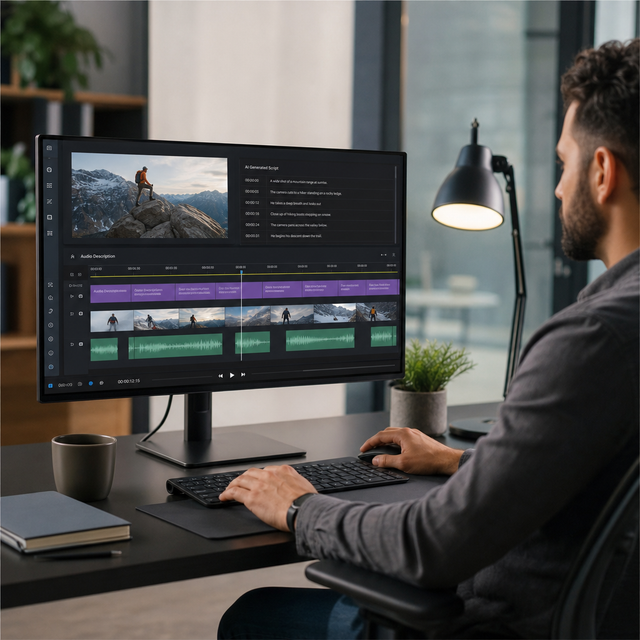
Every article here comes out of building audio description software day to day — not generic filler. We write about the regulatory side (EAA 2030, ADA, WCAG 2.2, and which deadlines actually matter), the craft of writing description that doesn’t talk over dialogue or music, and where AI genuinely speeds up the production pipeline for broadcasters and streaming platforms — and where it still needs a human editor.
Accessibility
Regulatory deep dives: WCAG 2.2 success criteria, EAA 2030 deadlines, ADA case law, and what compliance actually requires page by page.
Best Practices
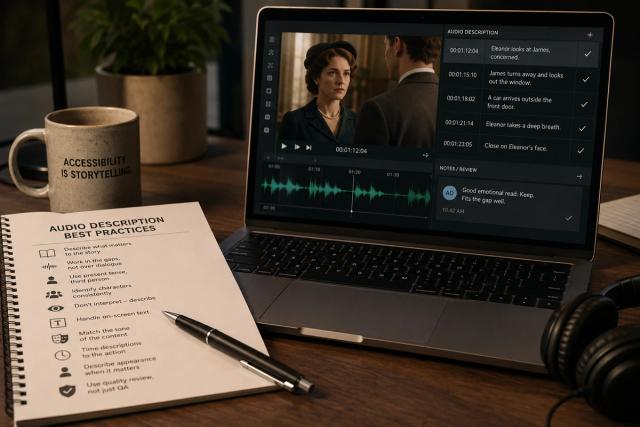
Craft-level guidance for describers: pacing, word choice, fitting description into gaps without stepping on dialogue, and QA workflows that catch errors before delivery.
AI & Technology
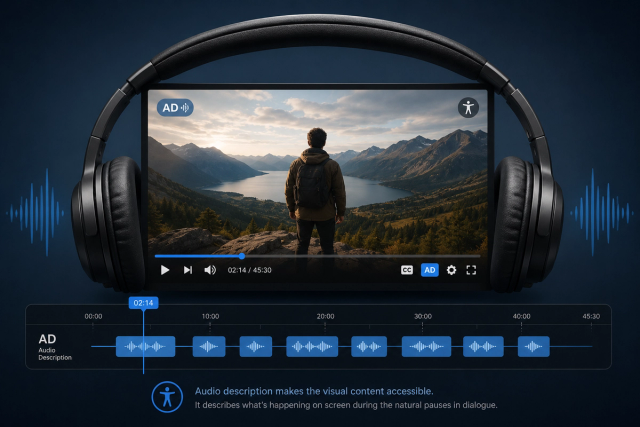
Where automation genuinely speeds up audio description production, where it still falls short, and how the tooling landscape is evolving.